
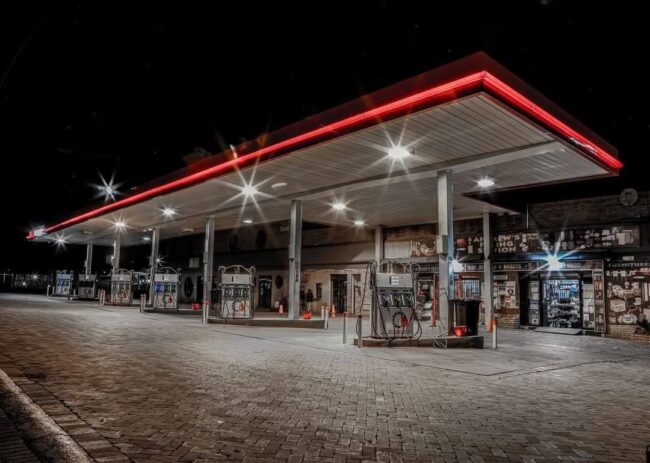

Filling stations to dispense petrol at N739 from Tuesday – Dangote

Filling stations to dispense petrol at N739 from Tuesday – Dangote
Aliko Dangote, Chairman of Dangote Petroleum Refinery, has disclosed that MRS and other filling stations purchasing Premium Motor Spirit (PMS) from his refinery will begin dispensing fuel at N739 per litre starting Tuesday in Lagos.
Dangote stated this on Sunday during a press briefing, recalling the earlier reduction of the ex-depot price from N828 to N699 per litre.
The latest reduction which has been widely acknowledged represents a N125 per cent reduction at a go.
The new pricing took effect on December 11, 2025, marking the 20th petrol price adjustment implemented by the refinery this year as Dangote continues to fine-tune domestic supply dynamics.
Speaking at the refinery yesterday, Dangote called on members of the Independent Petroleum Marketers Association of Nigeria (IPMAN) to patronise the refinery, reaffirming that sales to marketers would remain at N699 per litre.
“We are going to start with MRS stations, most likely on Tuesday, in Lagos. We have also asked members of IPMAN to come. Anybody who can buy 10 trucks, come and buy at N699,” Dangote said.
He expressed confidence in his company’s determination to ease the burden of fuel prices during the Yuletide season.
“We are going to use whatever resources we have to make sure that we crash the price down. By the grace of God, within a week to 10 days, we will be able to deliver. We don’t want to see, at least for this December and January, petroleum products sold above N740 nationwide,” he added.
Dangote warned that his company would resist any attempts to sabotage efforts to stabilise fuel prices.
….faults NMDPRA over reckless licensing
Dangote criticised the Nigerian Midstream and Downstream Petroleum Regulatory Authority (NMDPRA) for what he described as “reckless issuance of licenses.”
“The NMDPRA has issued reckless licenses. We have to complain to the government because they normally issue licenses in the middle of the month. Now, they are ready to issue about 7.5 billion litres for the first quarter of 2026. Despite that, we are still guaranteed to supply enough,” he said.
Dangote noted that the President had approved the immediate implementation of a 15 percent import duty on refined petroleum products to protect domestic industries.
He said despite the suspension of the policy in November, his refinery still reduced the pump price by N49, demonstrating commitment to affordability.
“The 15 percent is just a warning to discourage imports. Even though the implementation was suspended, we still reduced the price by N49. That’s about N60 billion in a month — not a small amount,” he said.
According to him, it is not merely a reduction in the cost of a commodity; it is a strategic signal, a patriotic intervention, and a significant shift in Nigeria’s pursuit of price stability, economic competitiveness, and national resilience.
He said, “For years, the price of petrol has been one of the most sensitive indicators of Nigeria’s economic health. It affects everything — transportation, food prices, logistics, business competitiveness, inflation expectations, household budgets, and ultimately, the social mood of the country. A change in petrol price is a change in the temperature of the entire economy.
This is why what happened today deserves more than a passing headline. It deserves analysis, acknowledgment, and appreciation.”
A professor of Petroleum Economics, Wunmi Iledare, has implored regulators in the country’s oil and gas sector to be vigilant about petrol price reduction, saying it must not strangulate independent marketers.
He said, “Dangote Refinery’s cut in ex-depot petrol price from N828 to N699 per litre is a welcome step that could ease pressure on consumers and transport operators nationwide. However, this development also reinforces the reality of an increasingly concentrated downstream market.
“Regulators must stay alert. Strong oversight is needed to ensure the lower price is passed on fairly at the pump, prevent discriminatory supply practices, and protect smaller marketers who keep the system competitive.
“This is a positive move, but Nigeria’s downstream market requires vigilant monitoring to avoid dominance risks and ensure real benefits reach citizens.”










Leave a Reply