
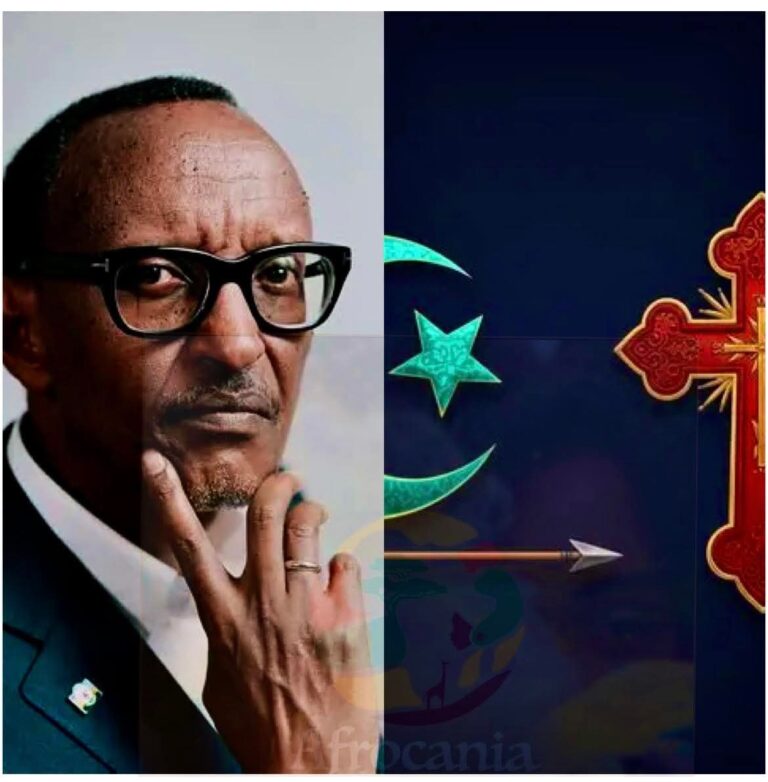
I Have Closed Over 6,000 Churches and Mosques in Rwanda” — President Kagame Cracks Down on Unqualified Religious Leaders

Rwanda’s President, Paul Kagame, has once again stirred global conversation following his firm stance on religious regulation in the country. In a bold declaration that has sparked widespread debate, Kagame revealed that his administration has shut down over 6,000 churches and mosques, insisting that religious leaders must possess formal theological training before leading congregations.
According to the Rwandan leader, faith should not be turned into a commercial venture or manipulated to exploit vulnerable citizens.
A Tough Message to Religious Entrepreneurs
President Kagame did not mince words as he criticized what he described as the commercialization of religion. He emphasized that places of worship must operate within legal and ethical frameworks, just like any other institution in society.
“Stop playing with people’s faith and making it a business,” he reportedly declared, underscoring his government’s resolve to regulate religious practices in the country.
The crackdown forms part of Rwanda’s broader governance reforms aimed at promoting professionalism, accountability, and order across sectors — including religious institutions.
Why the Closures Happened
Over the years, Rwandan authorities have expressed concern over the rapid proliferation of churches and prayer centers, many of which reportedly operated without proper registration, adequate infrastructure, or trained leadership.
Some of the key issues cited by officials include:
Lack of formal theological education among religious leaders
Poor building standards and unsafe worship environments
Noise pollution complaints
Financial exploitation of congregants
Non-compliance with regulatory requirements
The government maintains that the closures were not targeted at suppressing religious freedom, but rather at enforcing standards designed to protect citizens.
Theology Degree Requirement
One of the most controversial aspects of the reform is the requirement that religious leaders obtain formal theological training before being licensed to operate.
Authorities argue that structured theological education will:
Promote sound doctrine and responsible leadership
Reduce manipulation and misinformation
Strengthen ethical accountability
Professionalize religious service
Critics, however, have raised concerns about whether such regulations could limit grassroots religious movements or infringe on freedom of worship.
Mixed Reactions Across Africa
The move has triggered mixed reactions across the continent. Supporters applaud Kagame’s decisive leadership, describing the reform as necessary to curb exploitation in the name of religion. Others caution that excessive state control over religious institutions may set a delicate precedent.
Rwanda, known for its strict governance model and post-genocide rebuilding success, has often taken bold policy decisions that challenge conventional approaches in Africa.
Balancing Faith and Regulation
The broader debate centers on a critical question: Where should governments draw the line between protecting religious freedom and preventing abuse?
While Rwanda’s constitution guarantees freedom of religion, the government insists that freedom does not eliminate responsibility or accountability.
As the reforms continue to unfold, one thing is clear — President Kagame’s message is firm: faith must not become a tool for exploitation, and leadership in any sector, including religion, must meet defined standards.
Whether other African nations will adopt similar measures remains to be seen, but Rwanda has once again positioned itself at the center of a continental conversation on governance and religion.





Leave a Reply