
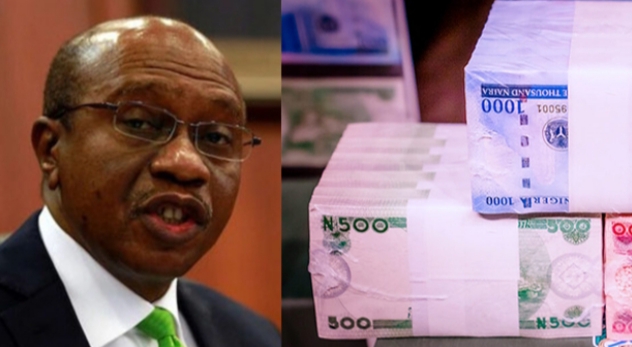
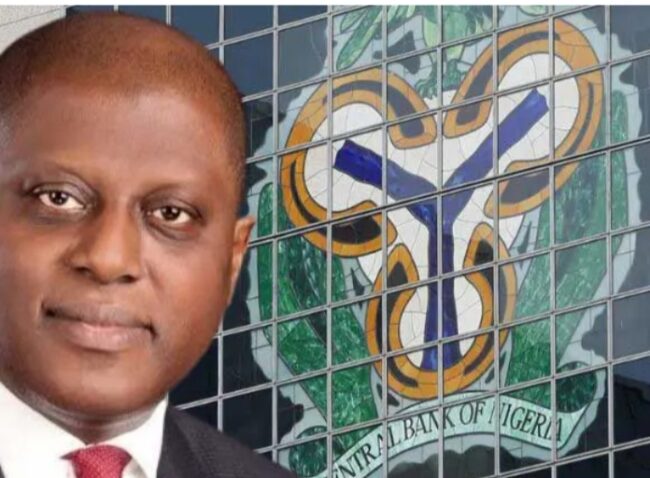
Emefiele Violated Nigeria’s Central Bank Act In Naira Redesign Exercise, EFCC Witness Tells Court
The witness, Chinedu Eneanya, who appeared as the seventh prosecution witness (PW7), made the claim while testifying before Justice Maryanne Anineh at the court sitting in Maitama, Abuja.
Aprosecution witness in the ongoing trial of former Central Bank of Nigeria (CBN) Governor, Godwin Ifeanyi Emefiele, on Wednesday, told a Federal Capital Territory High Court in Abuja that the 2022 naira redesign exercise violated provisions of the CBN Act.
The witness, Chinedu Eneanya, who appeared as the seventh prosecution witness (PW7), made the claim while testifying before Justice Maryanne Anineh at the court sitting in Maitama, Abuja.
Emefiele is being prosecuted by the Economic and Financial Crimes Commission (EFCC) on a four-count charge bordering on the alleged unlawful printing of new naira notes.
During cross-examination by defence counsel, Olalekan Ojo (SAN), Eneanya stated that findings from the investigation showed that the former CBN governor failed to follow due process as stipulated in the CBN Act, 2007.
According to him, “the investigation conducted by the team showed that the defendant disobeyed the provisions of the CBN Act, 2007”.
“The Central Bank must have board recommendations before the currency is redesigned,” the witness told the court.
The witness further disclosed that Emefiele had initially presented three sample designs for the redesigned naira notes in N1,000, N500 and N200 denominations, which were subsequently approved by then-President Muhammadu Buhari.
“The president approved on the 11th page and directed that the design be done locally. However, the investigation showed that what was eventually produced was not what was presented to the president,” Eneanya told the court.
He also revealed that the original design of Nigeria’s currency had historically been handled by De La Rue, a United Kingdom-based firm.
On whether the EFCC invited members of the CBN Board of Directors or its Committee of Governors during the probe, the witness said the commission instead obtained a statement from an official in charge of the apex bank’s Corporate Secretariat.
Earlier in the proceedings, Eneanya identified Exhibit N1 as the statement made by Ahmed Aliyu, Managing Director of the Nigeria Security Printing and Minting Company Limited (NSPMC).
When asked if there were contradictions in the statement, the witness maintained that the printing of the naira notes had already been carried out locally before the investigation commenced.
He also confirmed that the CBN paid NSPMC for the production of the redesigned currency.
Under re-examination by prosecution counsel, Abbas Mohammed, the witness clarified that the president’s directive was related to the design of the currency, not its production.
“Investigation shows that the design of the currency was already shown to the president, and it was approved,” he said.
Justice Anineh subsequently adjourned the case to May 11, 2026, for continuation of the trial.
The naira redesign policy, introduced in late 2022 under Emefiele’s leadership, triggered one of Nigeria’s most severe cash shortages in recent history, leading to widespread public outrage, protests, and disruptions to economic activities across the country.
The policy, which involved the introduction of new N200, N500 and N1,000 notes, was officially justified by the CBN as a measure to curb counterfeiting, reduce cash hoarding, and tackle insecurity, particularly ransom payments to kidnappers.
However, the implementation was widely criticised for its poor planning and execution, as millions of Nigerians struggled to access cash amid the limited supply of the new notes and restrictions on withdrawals.
The situation escalated into a constitutional crisis when several state governments challenged the policy at the Supreme Court, accusing the Federal Government of inflicting hardship on citizens.
The apex court later ordered the continued use of old naira notes alongside the new ones.
Following his suspension and subsequent removal from office in 2023, Emefiele has faced multiple investigations and prosecutions by anti-corruption agencies over alleged financial misconduct and abuse of office during his tenure at the CBN.






Leave a Reply