


Tragic trials: Shocking stories of lives lost in courtrooms, custody

Rising cases of custodial deaths, the deaths of individuals in the custody of police, prisons, immigration detention centres, and other state agencies, often linked to torture, inhumane treatment, and negligence, are raising troubling questions about whether a person’s fundamental right to life is effectively suspended upon arrest.
In this report, CHIJIOKE IREMEKA writes that every suspect, regardless of the allegations against them, retains the right to live peacefully and with dignity under the law.
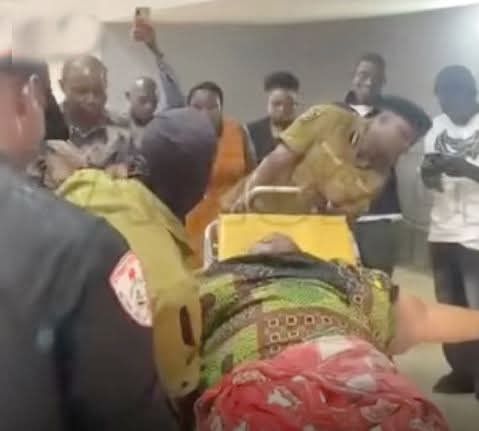
A few days ago, Mrs Titilayo Akindele collapsed and died at the Federal High Court in Benin, Edo State, while standing trial for alleged drug peddling.
The 52-year-old was being prosecuted by the National Drug Law Enforcement Agency at the time of her sudden, dramatic death in the courtroom.
Despite repeatedly complaining of failing health and severe body weakness, she allegedly received no medical attention, which led to her death.
Titilayo, a mother of five, was arrested by the NDLEA in January 2026 and accused of possessing Indian hemp.
She remained in the agency’s custody for three months before being arraigned in court.
However, her family and well-wishers are now seeking justice over the circumstances surrounding her death, insisting that the NDLEA failed in its duty of care and should be held accountable.
My mum died crying for help
Her 24-year-old son, Samuel Akindele, grieving both his loss and the burden now placed on him, told Sunday PUNCH that his mother died while begging for medical attention.
He said his mother ended up lying on the cold floor of a courtroom, not as a convicted criminal, but as an ordinary Nigerian standing trial over an allegation.
Though she had the right to medical care as a suspect, he said she was denied that right, leading to a tragedy the family never anticipated.
According to him, it would have been better for her to remain alive and face trial than to die in such circumstances. They insist she was effectively condemned before any conviction.
Sunday PUNCH reports that suspects are presumed innocent until proven guilty by a competent court of law, and agencies like the NDLEA have a duty of care to protect those in their custody and ensure access to medical treatment.
Now left to care for his younger siblings, Samuel said the incident has completely altered his life.
In a statement, he said there was nothing to indicate that Akindele was unfit to stand trial at the time she was taken to court.
“It is not true what they are saying. She was arraigned, and there was no issue that she was unfit. She personally walked to the car, got to court, and came down herself. What happened is not something you can start speculating about.
“She was arrested by the Edo State task force in January and transferred to the NDLEA for selling ‘Loud’ (a hard drug). When she collapsed, it attracted a crowd, and there were other suspects,” he said.
However, Samuel maintained that his mother was forced into the vehicle, contradicting the agency’s account.
He further alleged that the officers displayed inhumane behaviour in court, claiming they dismissed her condition as an act.
According to him, instead of assisting her, they accused her of pretending and asked her to stand up until she struggled and eventually lost consciousness.
This account was supported by an eyewitness, a lawyer, Barrister Leonard Uwagie, who spoke in a viral video.
“When we came out, I saw a lifeless body on the floor. Ordinarily, in such a situation, people would be rushing to help, but the NDLEA officers did not. When we tried to pressure them to carry her, they ran into their vehicle, apparently trying to leave,” he said.
Possible criminal liability against NDLEA, others
Following the allegations of negligence, Akindele’s lawyer has moved swiftly to challenge the circumstances surrounding his client’s death and push for accountability.
Like others, he is demanding a full investigation, including an autopsy, to determine the exact cause of death and whether negligence played a role.
He has also petitioned relevant authorities, calling for those responsible to be held accountable if any wrongdoing is established.
The lawyer is reportedly preparing to take legal action against the NDLEA if evidence shows she was unfit to stand trial but was still brought to court.
Analysts say a key plank of his argument is that she appeared visibly ill before the proceedings and that her condition may have been ignored.
Sunday PUNCH gathered that the lawyer’s approach is to first establish medical facts through an autopsy, then determine legal responsibility and, where necessary, pursue civil or criminal liability against the agency or individuals involved.
A legal analyst, Lawrence Ndukwe, said that, at this stage, the matter is less about a concluded case and more about building evidence to support a possible lawsuit or prosecution.
He noted that Samuel’s account is not just about his mother’s death, but about what he believes led to it, neglect, delay, and a system that failed to respond to a woman in distress.
Position of the law
The International Journal of Criminal, Common and Statutory Law defines custodial death as the death of a person while in state custody, including police, prison, or immigration detention.
Such deaths may result from torture, abuse, negligence, excessive force during arrest, suicide, or medical neglect, as alleged in Akindele’s case.
According to Article 5 of the Universal Declaration of Human Rights, adopted to reinforce global protection of fundamental rights, “No one shall be subjected to torture or to cruel, inhuman or degrading treatment or punishment.”
Ndukwe argued that even if the NDLEA’s claim of non-negligence is accepted, it does little to address the broader concerns raised by the case.
Sunday PUNCH learnt that under Nigerian law, a suspect’s rights do not begin at trial but from the moment of arrest, as provided for in the Administration of Criminal Justice Act.
The Administration of Criminal Justice Act, 2015, affirms that a person in custody retains the right to dignity, humane treatment, and access to medical care, stressing that detention does not strip individuals of these protections.
may have been tortured to death or deliberately silenced.
In another incident in the same state in 2024, an unidentified witness slumped and died inside an Ondo State High Court in Oka before proceedings began.
Eyewitnesses said the man had come to testify in a case involving a friend.
A court staff member, who spoke anonymously, said the man collapsed suddenly without any prior signs of illness or physical contact.
“He stood up from where he was seated, fell, and died. He didn’t look sick and did not collide with anything,” the source said.
Another eyewitness, Tunde Ariyo, said officers from the Enu-Owa Police Division later evacuated the body to a mortuary.
Similarly, in Lagos in 2019, an Ikeja High Court was thrown into confusion when an unnamed witness slumped and died shortly before testifying in a land dispute before Justice O.A. Olayinka.
According to witnesses, the man began coughing and gasping for air, left the courtroom, and collapsed in the corridor.
“He was vomiting blood, and people were afraid to go near him. A medical team later arrived in an ambulance to take his body away. His lawyer informed the judge, who adjourned proceedings,” a witness recounted.
Dark tales of justice
Custodial deaths have become a troubling feature of the country’s justice and detention system, raising serious questions about whether a citizen forfeits the fundamental right to life upon arrest.
Sunday PUNCH reports that custodial death remains one of the gravest violations in any society governed by the rule of law.
Its rising frequency further provokes a disturbing question: can a citizen’s right to life be effectively suspended once they are taken into custody?
Nigeria’s increasing cases of custodial deaths also raise urgent concerns about how suspects are treated in detention, and whether they are, in practice, condemned before their trials conclude, even as the law presumes every suspect innocent until proven guilty by a competent court.
The CLEEN Foundation, formerly known as the Centre for Law Enforcement Education, is a prominent non-governmental organisation focused on improving prison welfare and criminal justice through advocacy, research, and policy dialogue.
the coalition, Osaro Onaiwu, the group alleged that the deceased had been unlawfully detained on fabricated charges and was never arraigned in court before his death.
“Many incidents like that of Erasmus have been swept under the rug in recent years, which is why we are taking this matter seriously to prevent a recurrence,” he said.
Onaiwu added that the coalition was engaging relevant authorities, including the Police Service Commission and the Inspector General of Police, to develop strategies for improving policing in line with human rights standards.
Custodial deaths serious human rights violations – CSO
Civil society organisations have consistently condemned custodial deaths in Nigeria, describing them as serious human rights violations and evidence of systemic abuse within law enforcement agencies.
According to the Project Manager of Liberty Initiatives, Chidi Okpala, many deaths in custody are linked to torture, inhumane detention conditions, lack of medical care, and unlawful detention practices.
He said these incidents reflect weak accountability systems and a culture of impunity among security personnel.
Okpala noted that custodial deaths violate constitutional protections, particularly the right to life and the dignity of the human person.
He called for independent investigations, prosecution of erring officers, and comprehensive reforms in policing standards, including improved detention conditions, proper documentation, and guaranteed access to legal representation for detainees.
“Overall, custodial deaths are preventable tragedies that undermine public trust in the justice system and highlight the urgent need for institutional reform in Nigeria,” the project manager said.
Sunday PUNCH reports that ending custodial deaths in Nigeria will require firm legal, institutional, and cultural reforms.
The Civil Liberties Organisation and Amnesty International have recommended strict enforcement of suspects’ rights from the point of arrest through detention.
They emphasised that detention facilities should be equipped with CCTV monitoring systems, maintain transparent custody records, and allow regular independent inspections.
“Access to lawyers, family members, and medical care must be guaranteed. Police training should emphasise human rights and non-violent interrogation, while torture prevention laws must be fully enforced.
“An independent oversight body should investigate every custodial death promptly to ensure transparency and accountability. Officers and agencies found culpable should face severe penalties, including dismissal, loss of benefits, and criminal prosecution for offences such as murder or manslaughter,” the groups stated.
They further recommended that courts impose custodial sentences and award financial compensation to victims’ families where appropriate.
“Agencies that fail to prevent such deaths should face sanctions, budgetary consequences, and even leadership removal. These measures can help deter abuse and rebuild public trust,” they added.












Leave a Reply