

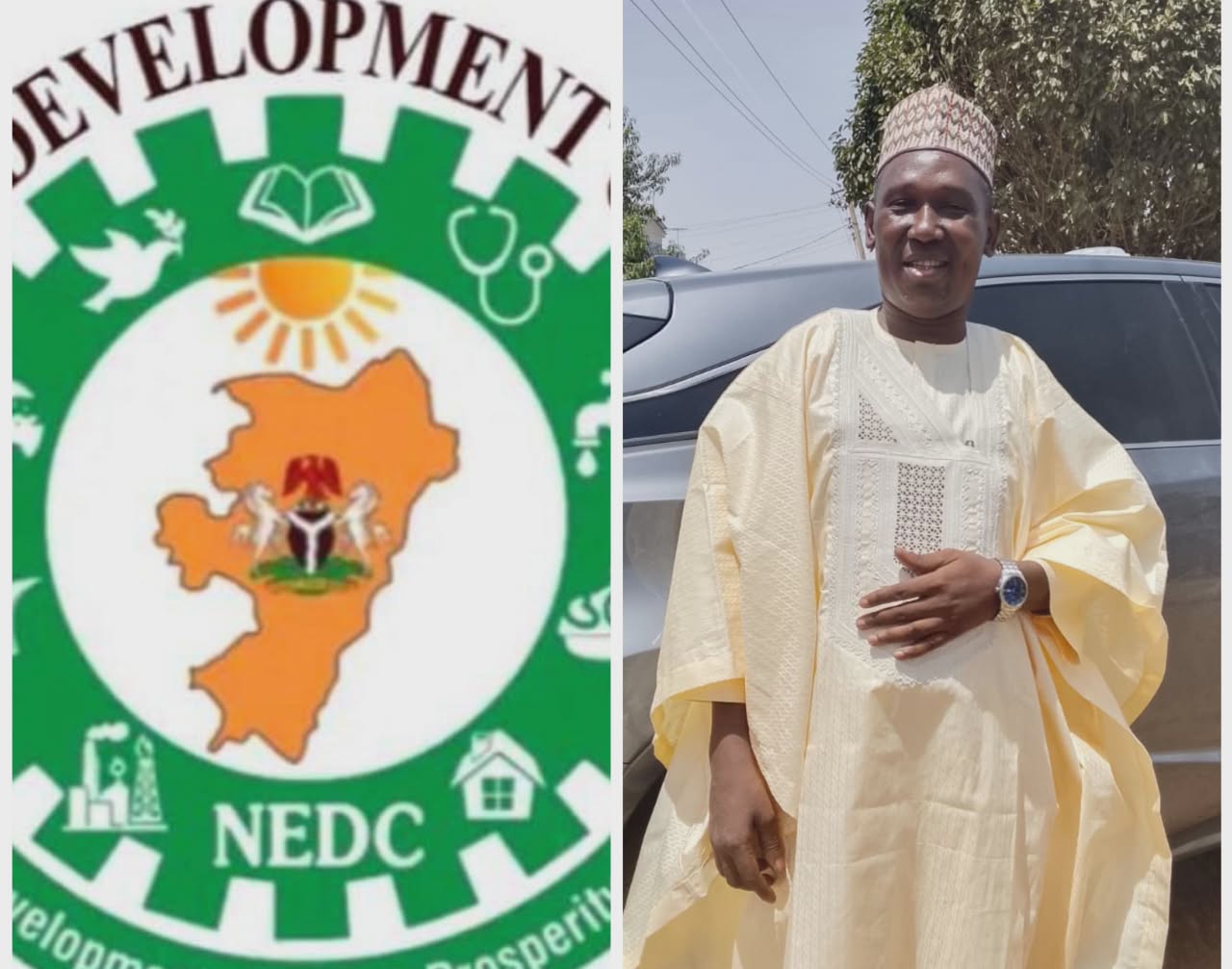

Constitutional Process, Institutional Integrity, and the Need for Responsible Public Discourse on NEDC Appointments

By Engr. Maidabino Umar
Political Analyst and Public Affairs Commentator
Recent public discussions surrounding leadership appointments in the North East Development Commission (NEDC) have generated considerable attention across the North-East region, particularly following statements credited to certain groups advocating for specific individuals to occupy future positions within the Commission.
While public participation in governance is a healthy democratic practice, it is equally important that such discussions are guided by constitutional understanding, legal frameworks, and institutional responsibility.
Appointments into strategic federal institutions such as the North East Development Commission are not products of emotional campaigns, regional pressure, or public agitation. Rather, they are governed by constitutional authority, statutory provisions, and administrative procedures established by law.
The NEDC, like many federal agencies and commissions, operates under an enabling Act that defines its structure, mandate, and leadership framework. In addition, appointments into federal boards and executive management positions are ultimately made at the discretion of the President and Commander-in-Chief of the Armed Forces of the Federal Republic of Nigeria, subject where necessary to confirmation or ratification by the National Assembly, and in alignment with the principles of the Federal Character system.
This constitutional process exists to preserve fairness, balance, equity, and institutional credibility. It ensures that merit, national spread, and the public interest remain the core determinants of leadership selection. Therefore, public narratives suggesting entitlement to positions based solely on state rotation, public sentiment, or unofficial endorsements may unintentionally create misconceptions capable of undermining confidence in established legal procedures.
The strength of Nigeria’s democracy rests on the predictability of its institutions. When appointment processes are reduced to public campaigns or sectional lobbying, it weakens the authority of the law and sets a precedent that threatens administrative stability. Respecting institutional boundaries is not a call to silence citizens, but a reminder that lawful channels exist for participation and redress.
It is therefore important to distinguish between public advocacy and constitutional reality. Citizens and stakeholder groups have every right to express aspirations and expectations. However, such expressions must remain respectful of due process and avoid creating impressions that appointments into federal institutions are predetermined, negotiated through pressure, or influenced by emotional campaigns.
Public advocacy becomes counterproductive when it crosses into misrepresentation. Claims of endorsement, entitlement, or zoning arrangements that have no basis in the NEDC Establishment Act can mislead communities and distract from the Commission’s core humanitarian mandate. Civic engagement should educate, not incite.
In the case of the North East Development Commission (NEDC), sensitivity is particularly important because the Commission was established to address the humanitarian and developmental challenges affecting the North-East geopolitical zone, including communities in Bauchi, Borno, Adamawa, Yobe, Gombe, and Taraba States. Its mission is one of recovery, rebuilding, and regional stability.
At a time when the Commission continues to play a critical role in restoring hope to affected communities, public conversations should strengthen institutional harmony rather than create unnecessary division or misunderstanding. The victims of insurgency, displacement, and poverty deserve agencies that function without the distraction of politicized succession debates.
It is equally necessary to clarify that Malam Musa Umar Yashi, FCAI, Executive Director for Humanitarian Affairs at the North East Development Commission (NEDC), has remained focused on his statutory responsibilities and humanitarian mandate. His office is dedicated to supporting vulnerable populations, coordinating relief interventions, and advancing programmes that improve the lives of affected communities.
There is no public record suggesting that he has promoted, encouraged, or authorized campaigns linked to future appointments within the Commission. It is therefore unfair and inappropriate to draw his name or office into speculative narratives capable of generating institutional tension or public misunderstanding.
Malam Musa Umar Yashi’s record in public service speaks to dedication, professionalism, resilience, patriotism, and a commitment to unity in diversity. His contributions within the Commission have been centered on service delivery, humanitarian response, and strengthening support for communities across the North-East. Linking career public servants to political agitation without evidence undermines morale and distracts from measurable outcomes in the field.
Responsible public engagement requires that individuals and organizations exercise caution when issuing statements that may be interpreted as official positions or create the impression of endorsement by public office holders.
The integrity of institutions must remain above speculation, and national discourse must always be rooted in facts, legality, and respect for constitutional order. Media platforms, civil society, and opinion leaders have a duty to verify claims and provide context, especially on matters that affect regional stability and federal appointments.
As Nigerians, our collective responsibility is to support institutions, promote lawful processes, and encourage unity over division. Public confidence in governance is strengthened not by pressure or sensational narratives, but by adherence to the rule of law and respect for established procedures.
Where citizens believe there are gaps in representation or equity, the Constitution provides avenues through petitions to the National Assembly, engagement with the Federal Character Commission, and structured dialogue with the Presidency. These are the instruments of mature democracy.
Ultimately, the future of federal institutions such as the North East Development Commission should remain guided by constitutional authority, fairness, national interest, and the collective objective of serving the people.
As aptly stated by Engr. Maidabino: “Strong institutions thrive when public conversations are guided by facts, constitutional understanding, and responsible engagement. Leadership appointments in national agencies must remain rooted in legality, fairness, and due process, while individuals entrusted with public office should be judged by their service, professionalism, and commitment to national development.”
Finally, it is important to caution against the growing trend of creating public agitation where no vacancy exists, or projecting personal preferences as institutional decisions. Such practices not only mislead the public but also place undue pressure on serving officials and the appointing authorities. Stakeholders are therefore urged to exercise restraint, respect the sanctity of due process, and allow constitutional procedures to take their full course. The stability of the North East Development Commission and the credibility of Nigeria’s governance system depend on our collective discipline to separate lawful advocacy from disruptive speculation.












Leave a Reply