
Beyond Strength: White Lion’s Plan to Institutionalize Development in Ibadan NW/SW

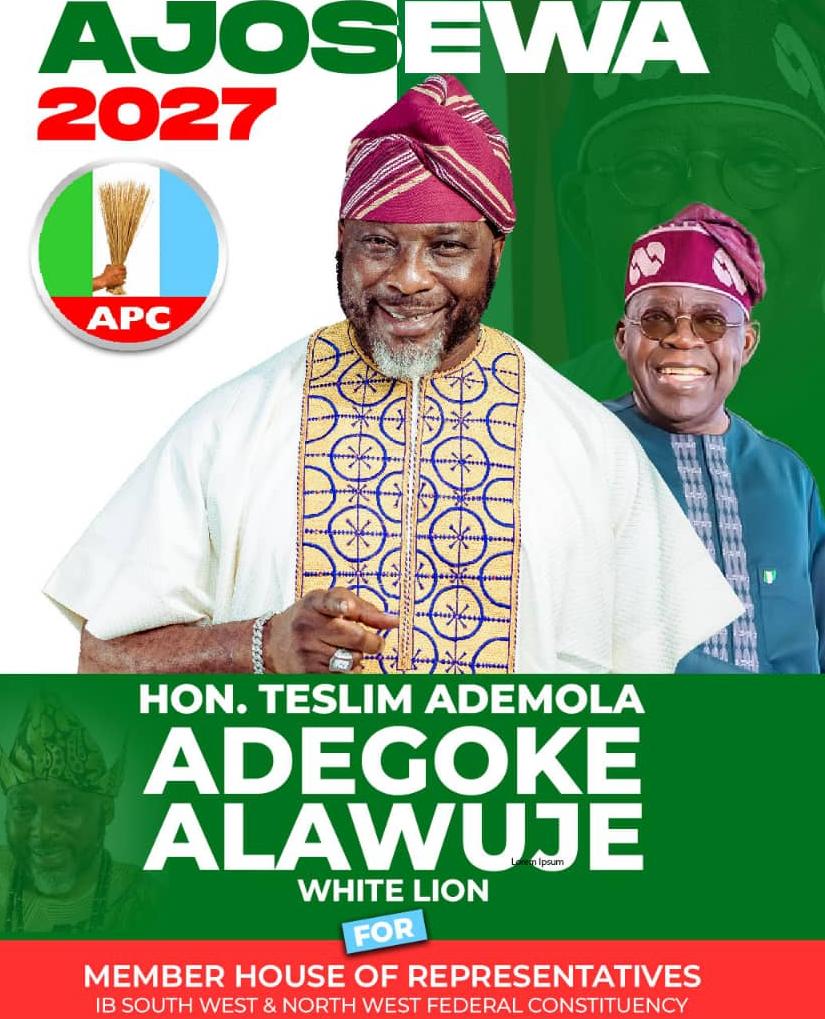
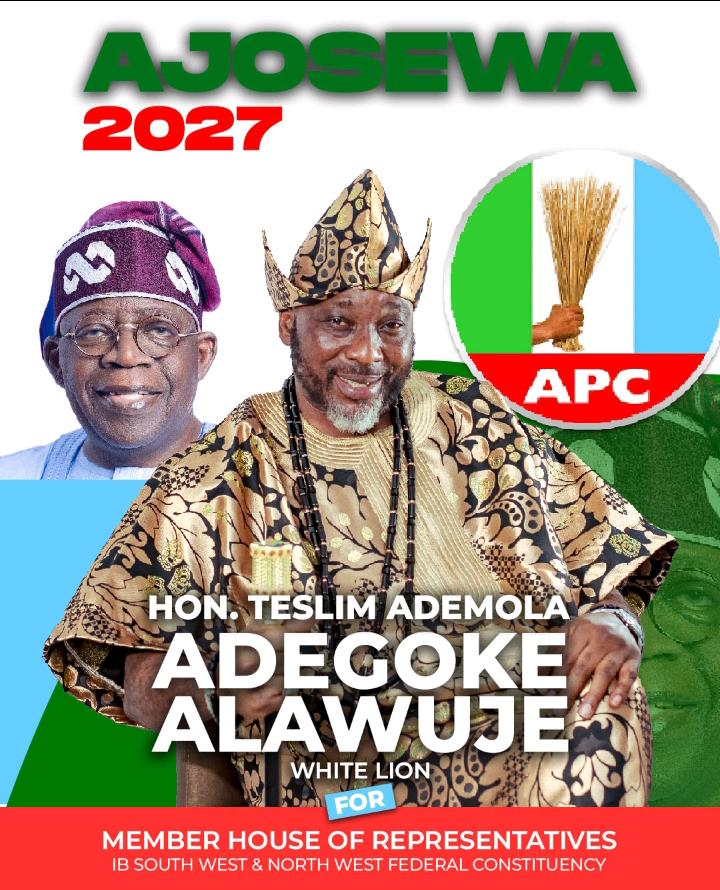
In the evolving political landscape of Ibadan North-West/South-West Federal Constituency, the conversation is gradually shifting from personality-driven influence to system-driven progress. At the center of this transition is Hon. Ademola Adegoke Alawuje, widely known as the White Lion, whose development philosophy is anchored not merely on strength, popularity, or presence—but on building enduring structures that outlive individual tenures.
For years, grassroots politics in many constituencies has revolved around personal capacity—who can give more, who can show up more, and who commands greater loyalty. While these elements remain relevant, Hon. Alawuje is advancing a more forward-thinking agenda: institutionalizing development so that progress becomes consistent, measurable, and sustainable regardless of who occupies office.
At the core of the White Lion’s plan is the belief that true leadership must create systems that work for everyone. His agenda emphasizes the establishment of functional community frameworks—structures that can drive education support, youth empowerment, healthcare access, and local economic development without interruption. Rather than one-off interventions, the focus is on continuity.
Education, under this vision, is not limited to occasional scholarships or material distribution. It is about creating support systems—structured bursary schemes, mentorship networks, and partnerships that ensure students from Ibadan North-West/South-West can consistently access opportunities to thrive. By doing so, the constituency moves from temporary relief to long-term human capital development.
In the area of youth empowerment, the White Lion’s approach is equally strategic.
Beyond empowerment programs that end with distribution, his plan advocates for skill development hubs, vocational training pipelines, and access to startup support systems.
The aim is clear: to move young people from dependency to productivity, and from uncertainty to economic relevance.
For years, grassroots politics in many constituencies has revolved around personal capacity—who can give more, who can show up more, and who commands greater loyalty.
While these elements remain relevant, Hon. Alawuje is advancing a more forward-thinking agenda: institutionalizing development so that progress becomes consistent, measurable, and sustainable regardless of who occupies office.
At the core of the White Lion’s plan is the belief that true leadership must create systems that work for everyone. His agenda emphasizes the establishment of functional community frameworks—structures that can drive education support, youth empowerment, healthcare access, and local economic development without interruption.
Rather than one-off interventions, the focus is on continuity.
Education, under this vision, is not limited to occasional scholarships or material distribution.
It is about creating support systems—structured bursary schemes, mentorship networks, and partnerships that ensure students from Ibadan North-West/South-West can consistently access opportunities to thrive. By doing so, the constituency moves from temporary relief to long-term human capital development.
In the area of youth empowerment, the White Lion’s approach is equally strategic. Beyond empowerment programs that end with distribution, his plan advocates for skill development hubs, vocational training pipelines, and access to startup support systems.
The aim is clear: to move young people from dependency to productivity, and from uncertainty to economic relevance.
Healthcare is another critical pillar. Rather than episodic medical outreach, the agenda envisions strengthened primary healthcare support, improved access to basic services, and collaboration with relevant stakeholders to ensure that quality healthcare becomes a dependable reality for residents. Institutional frameworks, in this regard, guarantee that care is not seasonal but continuous.
Equally important is community engagement. Hon. Alawuje’s model recognizes that development must be participatory. By encouraging structured dialogue between leaders and constituents, and by promoting accountability channels, governance becomes more transparent and inclusive.
This ensures that policies and projects are not imposed but are reflective of real community needs.
Infrastructure and economic growth also feature prominently in this rebirth agenda. However, the emphasis is not just on projects, but on maintenance culture and sustainability. Roads, markets, and public facilities must not only be built—they must be managed within systems that preserve their value over time.
What distinguishes the White Lion’s vision is its long-term orientation. It challenges the norm of short-lived achievements and instead proposes a legacy of order, coordination, and institutional strength. It is a call to move beyond visible effort to measurable impact.
As the 2027 political horizon approaches, the Ibadan North-West/South-West Federal Constituency stands at a defining moment. The choice ahead is not just about representation, but about direction—whether to continue with familiar patterns or to embrace a structured path toward lasting development.
In “Beyond Strength,” Hon. Ademola Adegoke Alawuje presents more than a campaign message; he offers a governance philosophy—one that seeks to transform goodwill into systems, and influence into institutions. For a constituency rich in history and potential, this may well be the blueprint needed to secure a stronger, more sustainable future.







Leave a Reply